Nature doesn’t always need sunlight to put on a show. While daytime rainbows tend to steal the spotlight, there’s a quieter, rarer spectacle that takes place under the cover of night—lunar rainbows, or moonbows. These pale, ghostlike arches appear when moonlight reflects, refracts, and disperses through water droplets in the atmosphere, much like their daytime counterparts. But their rarity and ethereal glow lend them an almost otherworldly charm, turning certain corners of the world into dreamscapes.
What Is a Lunar Rainbow?
Yes, this is a thing!
A lunar rainbow is essentially a nighttime rainbow, formed when light from the moon passes through raindrops. The physics behind it mirrors that of a regular rainbow: light enters a raindrop, bends (refracts), reflects off the inside surface, and exits the drop, bending again and splitting into its spectral colors. The twist lies in the light source—in this case, the moon.
However, there’s a catch. Moonlight is much fainter than sunlight, so moonbows appear far more delicate. Most appear white to the naked eye, but cameras with longer exposure can reveal a full spectrum of colors hidden within the ghostly arc.
When and Where Moonbows Appear
The ingredients for a moonbow are rather specific: the moon must be full or nearly full, the sky must be dark and clear, and rain or mist needs to be falling opposite the moon in the sky. These conditions are rare and fleeting, which is why lunar rainbows are often considered once-in-a-lifetime sightings.
There’s also an angle to consider. The moon must be low in the sky, typically less than 42 degrees above the horizon, so its light hits the water droplets at just the right angle to form the arc.
Several places around the world have gained fame as moonbow hotspots, due to their combination of frequent mist (from waterfalls or rain) and predictable moonlight.

Top Places Around the World to Witness Moonbows
Cumberland Falls, Kentucky, USA
Often called the “Niagara of the South,” Cumberland Falls is one of the few places on Earth where moonbows occur regularly. This Kentucky treasure, nestled within the Cumberland Falls State Resort Park, puts on a show during clear nights around the full moon. The broad cascade and constant mist provide ideal conditions, and park rangers even publish moonbow viewing schedules each month.
Victoria Falls, Zambia/Zimbabwe
Known locally as “Mosi-oa-Tunya” or “The Smoke That Thunders,” Victoria Falls is one of the most dramatic sites for viewing moonbows. During the full moon season (usually from February to July), mist rises from the thundering falls and creates perfect conditions for this phenomenon. Visitors on the Zambian side often enjoy organized full moon tours specifically for moonbow viewing.
Waimea, Hawaii
On the island of Kauai, moonbows can sometimes appear in the Waimea Canyon and nearby areas. The trade winds and frequent showers in the Hawaiian islands offer spontaneous opportunities for night rainbows, especially when the moon is bright and rain lingers over the cliffs.
Yosemite National Park, California
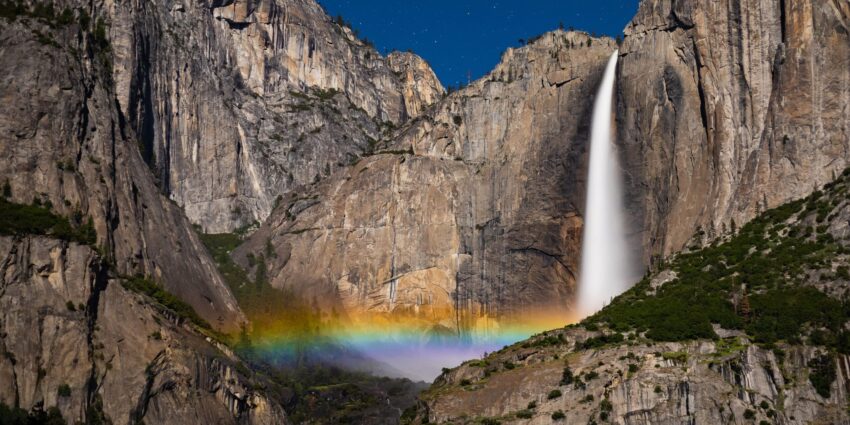
Though better known for granite cliffs and dramatic waterfalls, Yosemite becomes an enchanting destination for moonbow hunters in spring and early summer. Yosemite Falls and Bridalveil Fall both create massive mists when melting snow fuels their flow, and the moonbow conditions are often ideal from April to June.
Scotland’s Highlands
With its rugged terrain and frequent drizzle, Scotland occasionally delivers surprise moonbows—especially in the remote Highlands, where dark skies meet unpredictable rain. There’s no set calendar for sightings here, but some of the most authentic experiences come from the unplanned and unexpected.
The Science Behind the Glow

The process of forming a moonbow starts with light, and in this case, the moon must be nearly full to be bright enough. Moonlight itself is just reflected sunlight, which means the rainbow mechanism remains the same. However, because the moon’s light is far dimmer, the colors in a moonbow are not easily seen by the human eye.
Under dark skies, the rods in the human retina—responsible for low-light vision—take over, but they don’t detect color well. As a result, most moonbows appear silvery or white. Long-exposure photography brings out the full ROYGBIV spectrum, unveiling the red, orange, yellow, green, blue, indigo, and violet hiding in plain sight.
Photographing Moonbows
Capturing a moonbow on camera requires some patience and technical skill. A good camera with manual settings, a tripod, and a long exposure (10-30 seconds or more) are essentials. Since moonbows tend to be faint, the goal is to let as much light as possible reach the camera sensor.
Focus manually—autofocus struggles in the dark—and use a low ISO to reduce grain. A wide-angle lens helps capture the entire arc. The result? A colorful celestial ribbon often invisible to the eye, but stunning in a photograph.
Some photographers even seek out moonbow timelapse opportunities, where the arc shifts and fades as the moon moves across the sky. It’s a labor of love but rewards with one-of-a-kind footage.
Cultural and Mythical Associations
Throughout history, moonbows have inspired stories, myths, and spiritual reflection. In Hawaiian culture, moonbows were seen as a connection between the living world and the spirits. In other traditions, they were signs of peace, protection, or divine guidance.
Some folklore also speaks of moonbows as harbingers of luck or omens of coming change. Their silent, ghostly glow often carries a mystical air, especially when appearing without warning in a quiet night landscape.
Planning a Moonbow Adventure
Travelers seeking the magic of a moonbow need to combine careful planning with a healthy dose of luck. Ideal viewing happens around the full moon phase, preferably within two days before or after. Consulting moonrise and moonset times is essential, especially when visiting known hotspots.
Weather conditions should be monitored closely. Even the best-known locations can disappoint if the sky clouds over. Some destinations, like Cumberland Falls or Victoria Falls, offer the best chances due to consistent mist and open visibility.
Travelers might also want to check with local rangers or guides, as some parks and sites offer moonbow tours or moonlight viewing platforms.
More Than a Rainbow
Moonbows are more than a scientific curiosity. They’re reminders that even in the darkest hours, nature has its ways of creating wonder. Fleeting, faint, and utterly serene, these lunar rainbows invite those willing to look beyond the obvious.
In a world full of noisy spectacles and artificial light, the moonbow stands apart. It’s quiet. It’s rare. And it’s real.

Rhonda Fletcher
Rhonda is an articulate hodophile, wine lover, and dedicated travel journalist and photographer. She focuses on culinary and cultural exploration, wildlife expeditions, ancient discoveries, and ecologically sustainable travel. Follow her exploits and shenanigans on X and Instagram: @rr_fletcher